
Last updated October 15, 2026
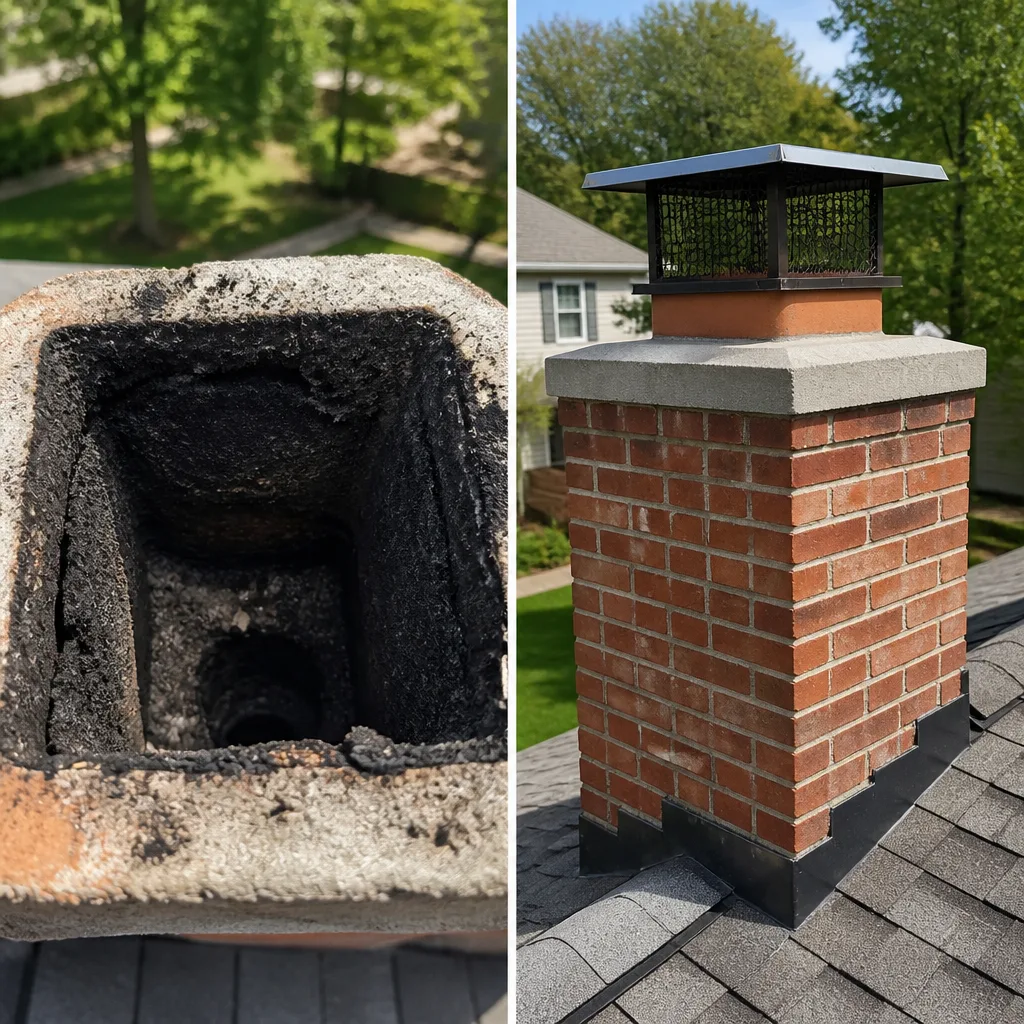 Sweep & inspection
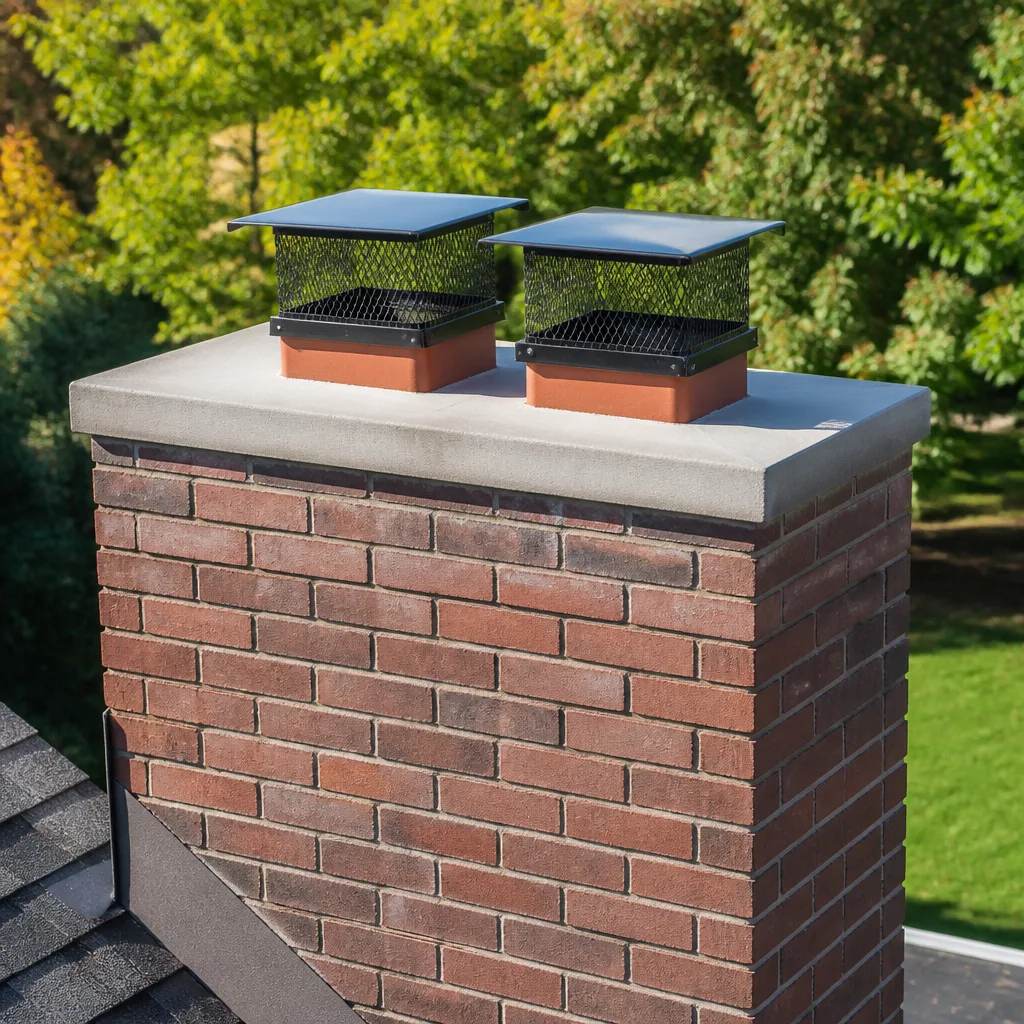 Caps & crowns
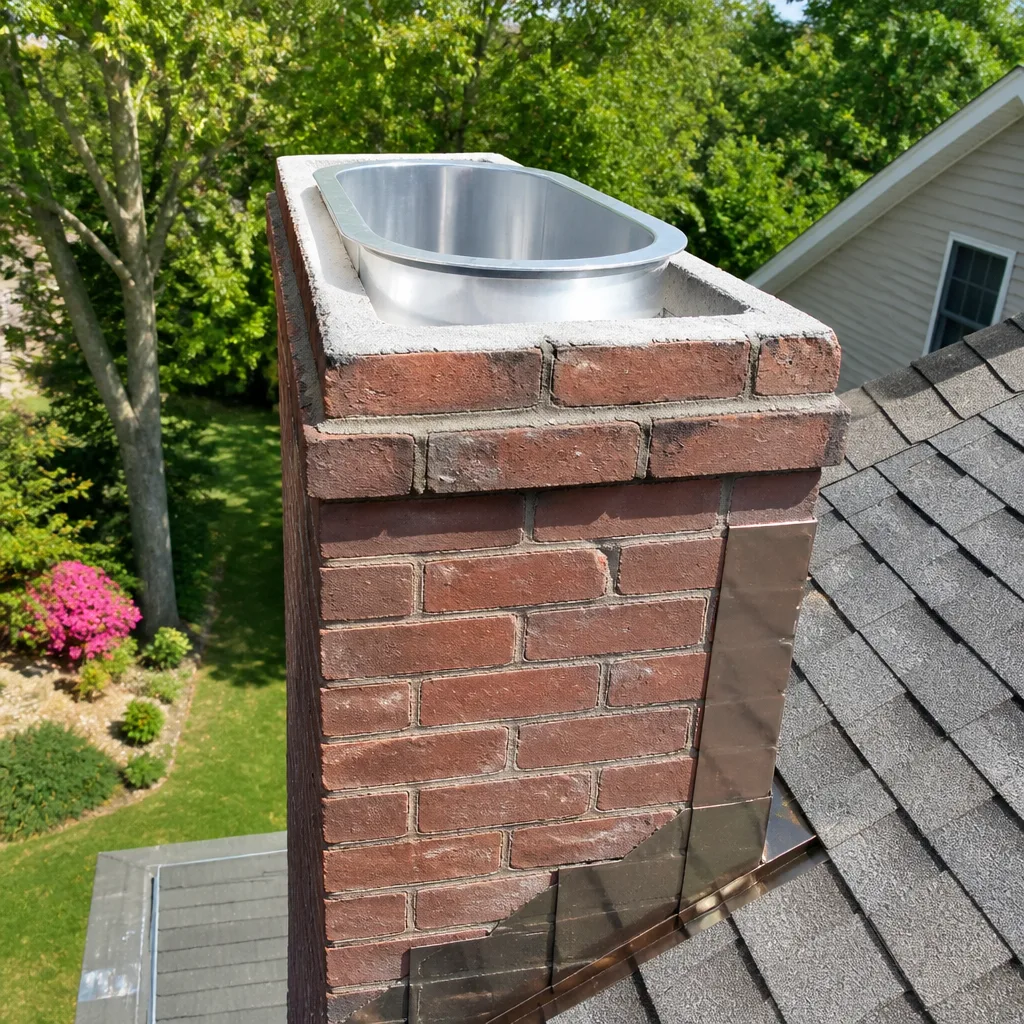 Flue relining
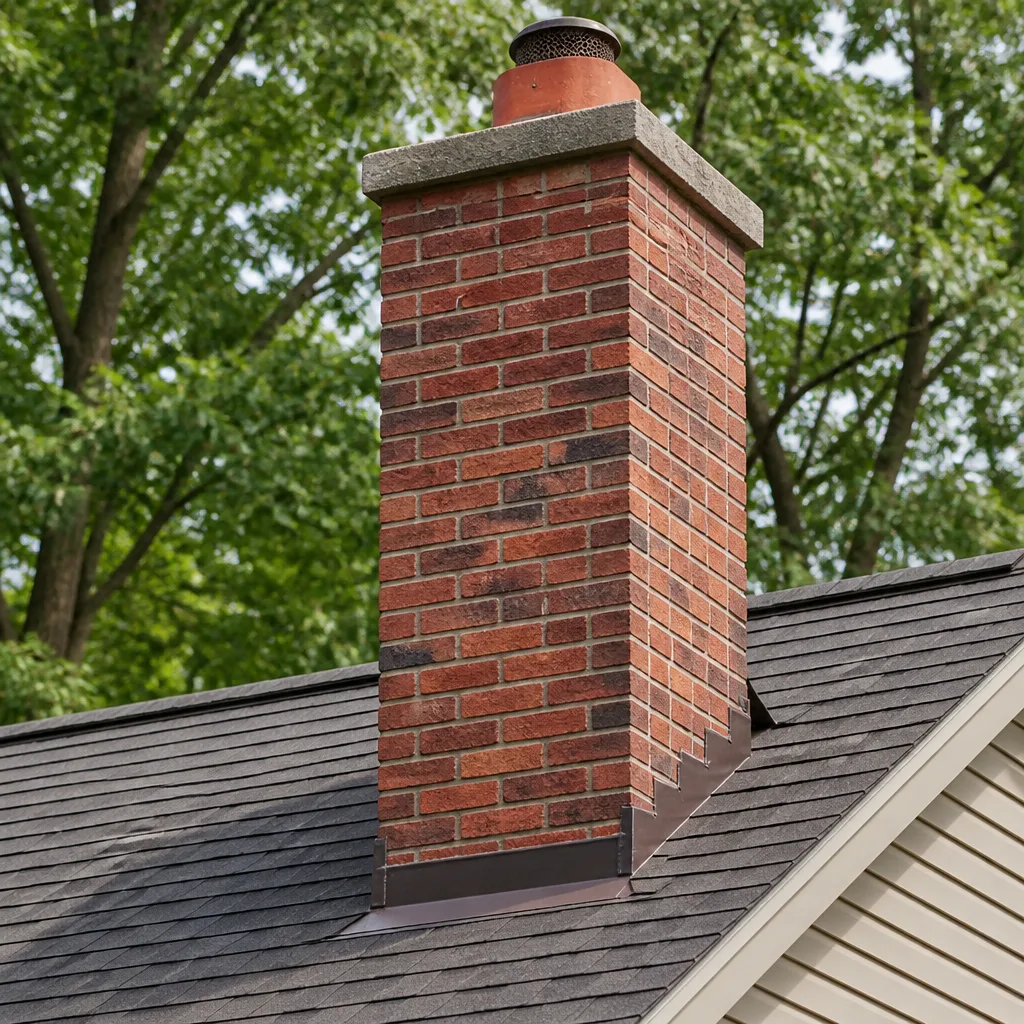 Masonry repair
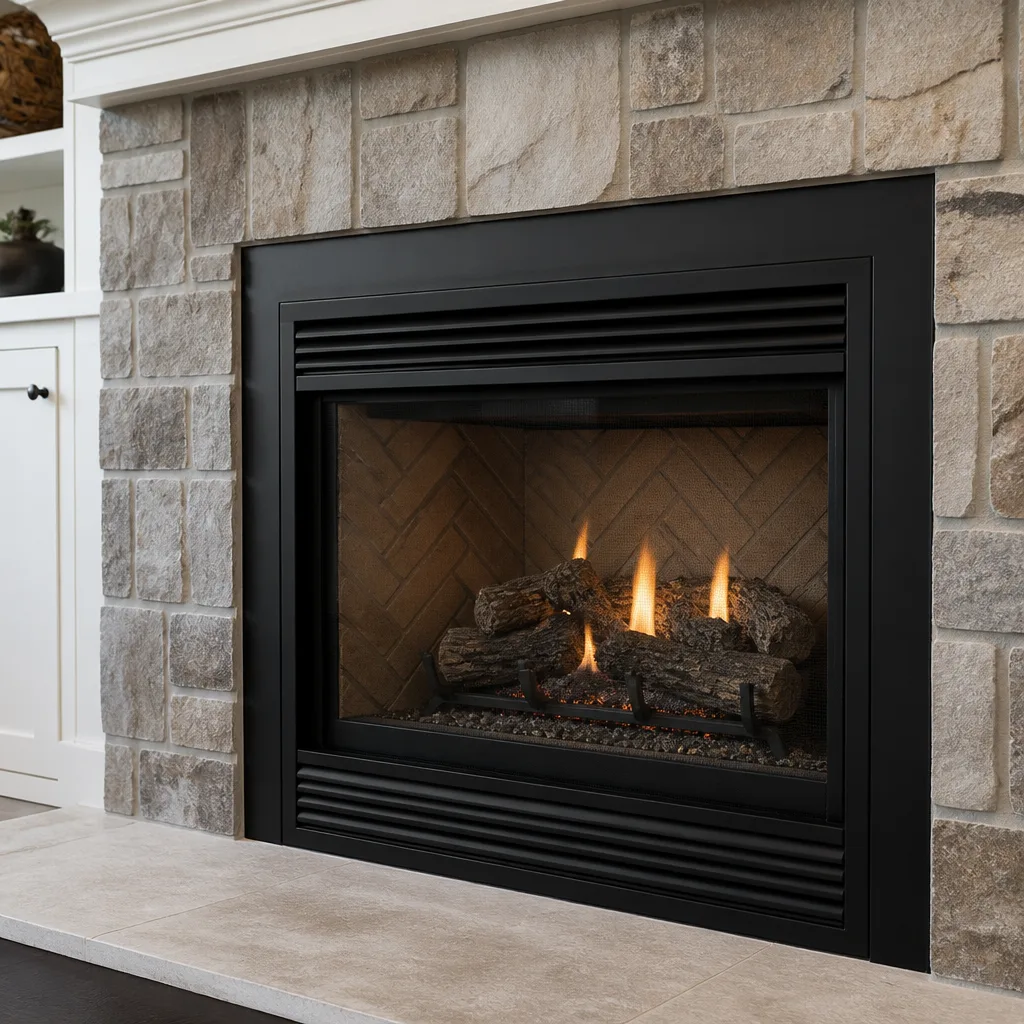 Gas fireplace service
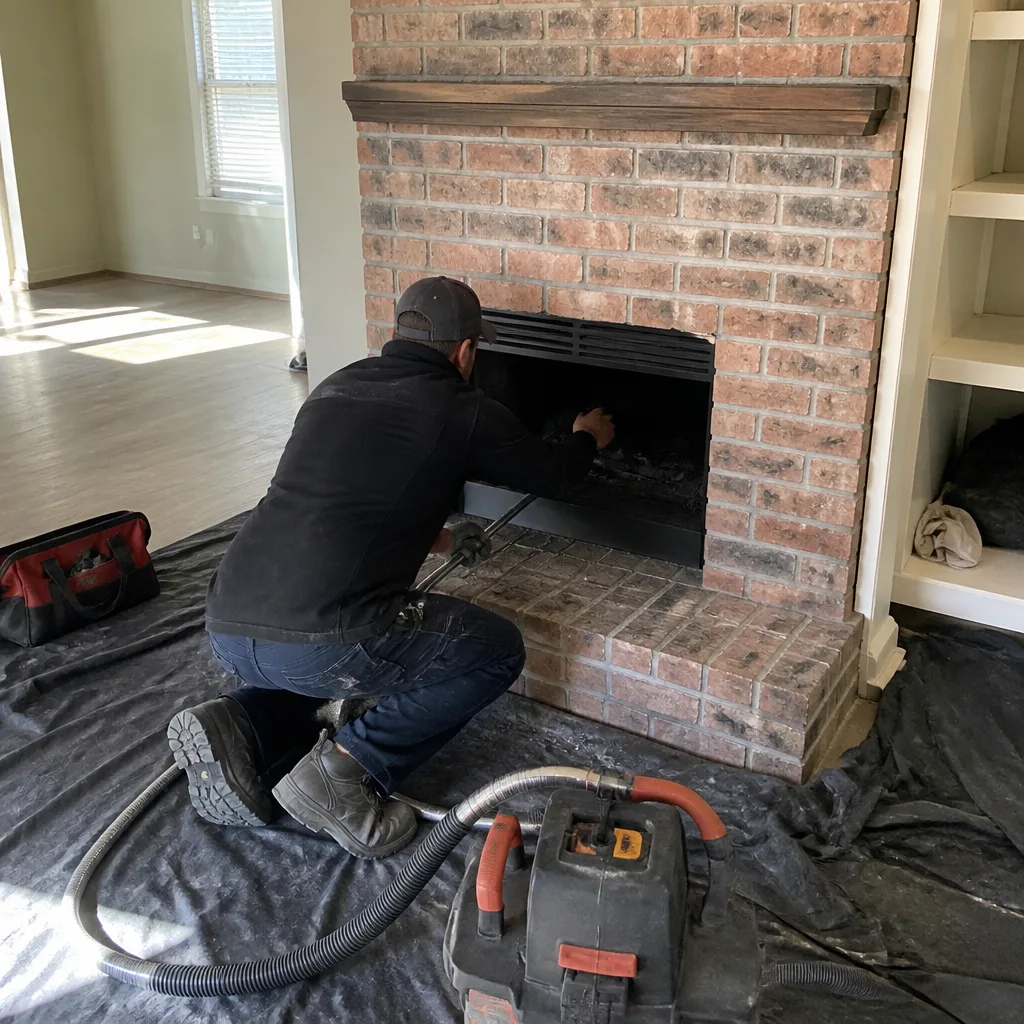
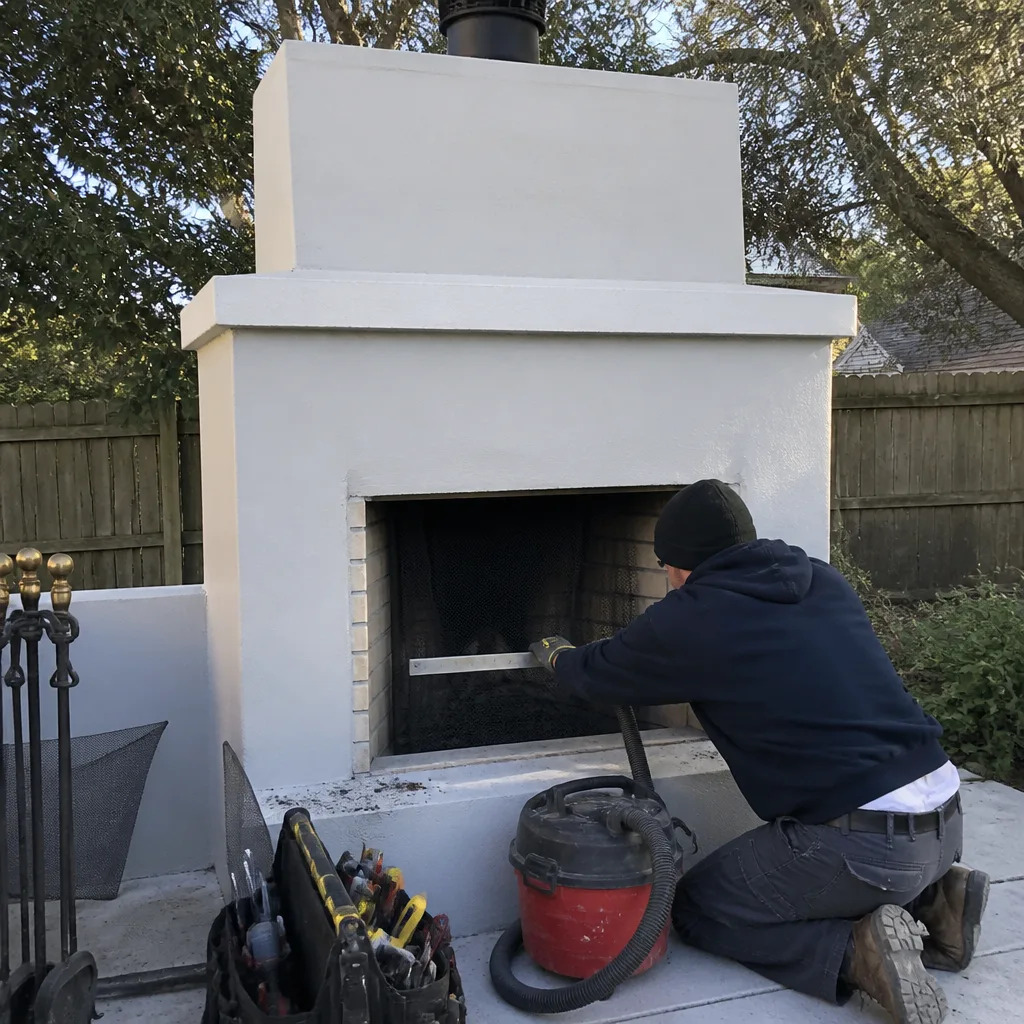
Level 1 sweep and inspection to the NFPA 211 annual standard - flue, crown, cap, and flashing checked and photographed
Chimney sweep logs do not sweep chimneys. They loosen some creosote - which then falls where a brush and vacuum still have to collect it.
DIY vs Professional Chimney Cleaning: The Jacksonville Homeowner’s Decision Guide
A chimney cleaning brush and rods from a home improvement store will remove loose soot, but they won’t touch Stage 2 glazed creosote, won’t flag a cracked tile liner, and won’t spot the gap in the flashing that’s been directing water into your chase for two summers. The DIY question for Jacksonville homeowners isn’t just “can I do this?” but “what does an incomplete job actually cost me?” This guide walks through the real economics, the physical limits of homeowner-grade equipment, the insurance implications most people never hear about until after a claim, and the specific scenarios where doing it yourself is genuinely defensible versus when it’s a false economy. For more guides & resources, see our blog.
Quick Answer
For most Jacksonville homeowners, professional chimney cleaning is the safer financial and practical choice. A proper sweep in Jacksonville typically costs $180 to $340 and includes creosote removal, a basic visual inspection, and documentation that matters for insurance and resale. DIY cleaning with store-bought tools runs $120 to $250 in equipment alone, removes only loose soot, can’t address glazed creosote or hidden liner damage, and leaves you with no record that the work was done. The exception: a homeowner with prior experience, a single straight flue, light soot buildup, and no signs of moisture or drafting problems can reasonably clean their own chimney as a maintenance step between professional visits, not as a replacement for them.
Styles & brands we work with
Table of Contents
- What a DIY Cleaning Can Actually Do (and What It Physically Cannot)
- The Real Cost Comparison: Equipment vs. a Jacksonville Professional Sweep
- The Insurance Risk Most Homeowners Never Hear About
- The One Scenario Where DIY Is Genuinely Reasonable
- What a Professional Checks That a Brush Never Will
- Jacksonville-Specific Factors That Affect Chimney Wear
- You’ve Been DIY-Cleaning for Years: What to Do Now
- Common Mistakes to Avoid
- When to Call a Professional
- Frequently Asked Questions
What a DIY Cleaning Can Actually Do (and What It Physically Cannot)
Here’s the straight answer most guides won’t give you. A homeowner with a chimney brush, flexible rods, and a drill attachment can remove Stage 1 creosote, the light, flaky soot that forms during typical wood-burning. That’s real work, and in a chimney with no underlying issues, it can extend the interval between professional visits. But the moment you’re dealing with Stage 2 creosote, the glossy tar-like accumulation that bakes onto flue walls during the humid Jacksonville shoulder seasons when fires burn cooler and smokier, a store-bought brush stops being effective. It’ll skate right over the surface without removing the deposit that actually ignites.
Here’s what a DIY chimney cleaning physically cannot do:
- Remove Stage 2 or Stage 3 glazed creosote. This requires mechanical removal with professional-grade rotary tools or chemical treatments followed by aggressive brushing. A homeowner brush set doesn’t generate the torque or the right brush geometry.
- Detect cracked or spalled flue tiles. These cracks are invisible to the naked eye from the top of the chimney and often hidden behind light soot. A pro uses a video scan.
- Confirm proper smoke draw. Cleaning alone doesn’t tell you whether the chimney is drafting correctly. A professional measures draft and checks for obstructions, negative pressure issues, and makeup air problems that affect performance and safety.
- Identify flashing failures or water intrusion. The most common structural problem we see in Jacksonville chimneys is water damage, and it starts at the roofline, not inside the flue. A brush never touches this.
- Produce documentation. This may sound like paperwork, but it matters for insurance and home sales, as we’ll get to below.
Think of it this way: a DIY clean is like vacuuming your living room. A professional sweep includes the vacuuming plus checking the wiring, looking for water stains behind the drywall, and measuring whether the HVAC is actually moving air. Both have a place. They are not the same job.
The Real Cost Comparison: Equipment vs. a Jacksonville Professional Sweep
The math on DIY chimney cleaning rarely works out the way the YouTube videos suggest, because they don’t account for buying equipment that actually works, once, for your specific chimney. Let’s lay out real numbers.
A basic homeowner chimney cleaning setup in Jacksonville runs:
- Chimney brush and rod kit: $45 to $90, depending on whether you need 6-inch or 8-inch diameter and whether your flue is round or rectangular
- Drop cloths and plastic sheeting: $15 to $35
- HEPA-rated shop vacuum filter: $25 to $50 (a standard shop vac filter will blow fine soot back into your living room, which defeats half the purpose)
- Safety glasses, N95 or P100 mask, work gloves: $25 to $45
- Optional but strongly recommended drill adapter: $20 to $40
- Total realistic first-time cost: $130 to $260, before you factor in your time
For comparison, a professional chimney sweep in the Jacksonville market typically costs $180 to $340 depending on the type of fireplace, chimney height, accessibility, and the level of inspection included. That price covers the full clean, creosote removal at whatever stage it’s in, a visual safety inspection, and a written report.
The financial gap narrows considerably when you account for equipment that wears out or doesn’t fit. Buy the wrong brush size for your flue and you’re making a second trip to the store. Rent a ladder if you have a steep roofline and you’re adding $30 to $50. The DIY path makes the most sense for homeowners who already own most of the gear and simply need a brush and rods for a single straightforward chimney.
And here in Jacksonville, the humidity means the stakes are slightly different than in a dry climate. You’re not just cleaning for fire risk. You’re looking for water intrusion. A DIY clean addresses neither cause nor consequence of the moisture that leads to spalled brick, rusted dampers, and failed flashing. A professional inspection does.
The Insurance Risk Most Homeowners Never Hear About
Here’s a fact worth your full attention, and it’s one of the more uncomfortable things we have to tell Jacksonville homeowners. Many homeowner’s insurance policies in Florida require or strongly prefer documented professional chimney maintenance. If a chimney fire occurs and you file a claim, the adjuster may ask: “When was the last professional inspection and cleaning?” If you can’t produce a dated invoice or report from a licensed chimney company within the past 12 months, your claim can be denied, or reduced to a fraction of the damage.
This is not a hypothetical. It’s a known pattern in fire-damage claims involving fireplaces and wood stoves, and it’s part of the reason professional chimney services exist as a documented trade. A DIY cleaning, no matter how thorough you believe it was, creates no paper trail. It doesn’t matter that you were up there with a brush last November. Without a professional record, the insurance company doesn’t have to take your word for it.
There’s a related point that matters during real estate transactions in Jacksonville. If you’re selling a home with a fireplace, the buyer’s inspector will almost certainly flag the chimney for evaluation if there’s no recent professional service record. You’ll then pay for a chimney inspection anyway, often under time pressure and potentially at a less convenient point in the sale. Establishing the inspection record now, before you’re up against a closing date, is the less expensive path.
For homeowners who’ve lived in their Jacksonville home for years and have a fireplace they’ve never had professionally inspected, this is the single most important financial reason to schedule a sweep and inspection this year. Not next year. This year.
The One Scenario Where DIY Is Genuinely Reasonable
Let’s be fair to the DIY argument. There is a real, defensible version of it. Here’s what it looks like:
- You have a single-story home with a straight, accessible flue and a roof you can stand on safely
- Your fireplace has only been burned a handful of times, and you know the wood was properly seasoned
- Last year’s professional inspection found no liner damage, no water intrusion, and no drafting problems
- You’re comfortable with heights, ladders, and basic tool use
- You understand that what you’re doing is removing light surface soot between professional visits, not replacing them
If all five of those are true, brushing your own chimney once or twice during the burn season is a reasonable maintenance step. It extends the value of your last professional cleaning and keeps Stage 1 creosote from accumulating into something harder to remove. This is the “light soot, single accessible flue, homeowner with prior experience” scenario, and it’s genuinely fine.
What makes DIY a false economy is pretending this limited maintenance is the same as a professional sweep and inspection. It’s not. It’s the equivalent of wiping down your car’s dashboard and calling it a detail. You haven’t touched the areas where failure tends to originate.
And one more practical note for Jacksonville specifically. Our burn season is shorter and milder than in northern climates, which means many homeowners go months between fires. That intermittent use, combined with humidity, is exactly when creosote transforms from flaky to glazed. A homeowner who burns occasionally in December and again in February may not visually notice Stage 2 creosote forming, because they’re not up there during the humid gap months when it’s setting up. A professional knows what to look for.
What a Professional Checks That a Brush Never Will
When we send a technician to a Jacksonville home, the chimney sweep itself is only part of the appointment. The inspection element is where the real safety value lives. Here’s what a professional evaluation includes that no brush-and-rod setup can replicate:
- Flue liner condition. Clay tile liners crack over time, especially in Jacksonville’s humidity-and-heat cycles. A cracked liner allows heat and combustion gases to reach the surrounding masonry, which is a direct pathway to a house fire. This is only visible with a camera or a careful visual inspection.
- Chimney cap and crown condition. The concrete crown that seals the top of your chimney cracks eventually. Once water gets in, it accelerates every other form of deterioration. A loose or missing cap lets in debris and animals.
- Flashing and chase top integrity. The intersection of chimney and roof is the most common water entry point. Jacksonville gets roughly 50 inches of rain a year. That’s a lot of opportunity for slow, invisible damage.
- Smoke chamber and damper function. The smoke chamber has ledges that collect creosote, and a damper that doesn’t seal properly lets conditioned air escape all summer, which is an energy cost you’re paying whether or not you ever burn a fire.
- Draft and airflow testing. This is the difference between a fireplace that works optimally and one that smokes into the room every time you light it, a problem often caused by negative pressure in the home rather than the chimney itself.
Our Chimney Inspection in Jacksonville service includes this full evaluation with every sweep. The report you receive is dated, documented, and in a format your insurance company or future buyer’s inspector will recognize. That’s the piece homeowners working on their own rooftops can’t produce no matter how thorough they are.
If the inspection turns up liner damage, we install professional trade materials like DuraFlex liner systems or recommend HeatShield resurfacing depending on the extent of the deterioration. These are the same products masonry supply houses sell to chimney companies, not substitutes from a big-box store.
Jacksonville-Specific Factors That Affect Chimney Wear
Chimney problems don’t happen at random. They follow patterns, and Jacksonville’s climate imposes a few specific ones that residents should understand whether they go the DIY route or call a professional. See our Seasonal Chimney Cleaning Care for Jacksonville: Year-Round Homeowner’s Guide for a month-by-month breakdown.
First, humidity. It’s the background condition of every chimney in this city. When humid air sits inside a flue for months while the fireplace is idle, creosote absorbs moisture and transitions from flaky Stage 1 into sticky, tar-like Stage 2. That’s the stage that’s hardest to remove without professional equipment, and it’s also the stage most likely to ignite if it does catch. A homeowner who only burns occasionally may not realize this transformation is happening because it occurs during the humid offseason, not during the burn season.
Second, the freeze-thaw cycle is less severe here than in northern Florida, but it’s not absent. Jacksonville sees enough nights near or below freezing that water which has already penetrated masonry expands and contracts with the temperature swings. Any small crack in a crown or a mortar joint becomes a little bigger each winter. That’s why inspecting the chimney top regularly matters, and why a chimney that looked fine two years ago may not look fine now.
Third, the rain. Jacksonville’s annual rainfall is substantial, and when it comes with wind, which it does in summer thunderstorms, it gets driven sideways into flashing and chimney caps. The most common repair we perform in Jacksonville isn’t liner replacement or smoke chamber repair. It’s flashing and water intrusion work, because the roofline is precisely where the weather attacks first. A chimney brush never touches this.
Fourth, salt air. Coast-adjacent neighborhoods like Atlantic Beach, Neptune Beach, and homes near the Intracoastal deal with accelerated metal corrosion. Chimney caps, dampers, and any exposed metal component rust faster near salt exposure than inland. A homeowner in Mandarin or Orange Park won’t see the same wear rate as someone in San Marco or Riverside near the river. This is the kind of local variation that doesn’t show up in a generic chimney cleaning guide.
You’ve Been DIY-Cleaning for Years: What to Do Now
If you’ve been maintaining your own chimney for several years without professional involvement, you’re not in trouble. But you do have an information gap, and it’s worth closing before you need to make a claim or sell your home. Here’s a step-by-step approach that makes sense for your situation:
- Schedule a professional inspection and sweep this year. Even if you’ve been diligent with your own brush, this establishes the baseline. The report will tell you whether your DIY work has been adequate or whether something unnoticed has been developing.
- Ask for a video scan rather than a visual-only inspection. Given the multi-year gap in professional documentation, a camera inspection provides the most complete picture of liner condition. If the liner is intact and the creosote is minimal, you get the peace of mind of a clean baseline. If there’s damage, you catch it before it becomes an emergency or a barricade to selling.
- Keep the dated report. This is what you’ll show an insurance adjuster or a home inspector. It’s the document that validates the last several years of your DIY maintenance in any official context.
- Establish a realistic schedule. For most Jacksonville homes, an annual professional sweep is sufficient. If you burn frequently or use unseasoned wood, twice a year may be appropriate. Your inspector can advise based on what the scan shows.
- If you plan to sell in the next two years, do this now, not during escrow. A chimney report that’s 18 months old at time of sale is far more helpful than one you rush to obtain while the buyer’s timeline is compressing you.
There’s no penalty for having gone the DIY route. The only mistake would be skipping the professional baseline entirely because you assume your own work is sufficient. The stakes are too high and the inspection cost too modest to leave that question unanswered.
Common Mistakes to Avoid
- Assuming a clean-looking flue means a safe flue. The dangerous conditions, cracked liners, hidden water damage, Stage 3 creosote in the smoke chamber, are invisible without the right tools and training. A brush removes surface soot and gives you a false sense of completeness.
- Skipping the HEPA filter on your shop vacuum. Standard filters blow fine combustion particles through the air and into your home’s HVAC returns. You end up breathing what you were trying to remove from the chimney.
- Using unseasoned wood because it’s cheap or convenient. Green wood produces far more creosote than seasoned hardwood. In Jacksonville’s humidity, that creosote transitions to the glazed stage faster. The single best way to reduce creosote buildup is to burn properly dried oak or hardwoods with moisture content below 20%.
- Cleaning from the top with an unsafe ladder setup. Roof falls are among the most common causes of serious injury in home maintenance. If your roofline is steep or your chimney is on a second story, the risk isn’t justified by the savings.
- Assuming your chimney doesn’t need attention because you rarely use it. The damage happens when the fireplace is idle. Humidity, rain, and time do their work whether or not you ever light a fire.
- Spraying water or liquid cleaners into your chimney to “wash out” creosote. This can drive moisture into the masonry, create a slurry that hardens into a worse blockage, and damage internal components. Chemical treatments exist, but they’re meant to be used as part of a professional protocol, not a DIY shortcut.
When to Call a Professional
Call a professional if you notice any of these signs: smoke backing up into the room when you light a fire, a strong campfire-like odor coming from the fireplace even when it’s not in use, visible moisture or staining on the ceiling near the chimney, chunks of tile or masonry falling into the firebox, or animals nesting in the flue. Any of these indicates a condition that can’t be brushed away. If you’ve never had a professional inspection and you’ve been in the home more than three years, that’s also the moment to get a documented assessment on file. Chimney Sweep in Jacksonville service from Alcott includes the full evaluation with every appointment. Alcott Chimney Jacksonville offers free estimates in Jacksonville. Call (904) 453-7823.
Frequently Asked Questions
A standard chimney sweep in Jacksonville typically costs between $180 and $340 depending on chimney height, accessibility, and whether the flue has any complications like heavy creosote buildup. This price includes the complete cleaning and a visual safety inspection. Your exact price is quoted in writing before work begins. Call (904) 453-7823 for a free estimate based on your specific fireplace and chimney configuration.
The National Fire Protection Association recommends a chimney inspection at least once a year, with cleaning as needed based on the inspection findings. In Jacksonville’s climate, annual is the practical standard for most wood-burning fireplaces. Homes that burn frequently, use softer woods like pine, or have a history of creosote buildup may need cleaning twice a year. If you haven’t had a professional inspection in more than 12 months, this year is the year to schedule one.
You can remove light surface soot from a straight, accessible flue with store-bought equipment, but you cannot remove glazed creosote, detect cracked liners, identify water intrusion, or test smoke draw. A DIY brush matters most as a between-visits maintenance step for experienced homeowners with a recent clean professional inspection on file. It is not a replacement for a professional sweep and inspection. For most Jacksonville homeowners, the documentation and safety verification from a professional appointment are worth more than the equipment savings.
It depends on the extent and location of the damage. Hairline cracks in a clay tile liner may be candidates for HeatShield resurfacing, which seals the liner from the inside and restores its integrity at a lower cost than full replacement. More extensive damage typically requires a DuraFlex stainless steel liner system. The key point: we show you the camera footage and explain exactly what the scan found. We don’t recommend liner work we can’t demonstrate with evidence you can see. Nothing gets upsold without proof.
Creosote accumulates, and depending on the amount, it can eventually ignite and cause a chimney fire that damages the flue, the surrounding masonry, and potentially the house itself. Meanwhile, water intrusion from cracked crowns or flashing goes unnoticed and accelerates structural deterioration, leading to more expensive repairs later. There’s also the documentation gap: if you file an insurance claim after a chimney fire with no recent professional inspection on record, the claim may be reduced or denied. Call (904) 453-7823 to get a documented baseline inspection.
Yes. Every Alcott Chimney Jacksonville technician is background-checked and identity-verified under the Threshold Standard, and we send you the technician’s name and photo before they arrive. They carry and display a photo ID badge at the door, every time, no exceptions. You’ll never open your door to an unannounced stranger. That’s the standard we’ve operated under since 2002, and it’s not negotiable. Learn more about our Alcott Chimney Jacksonville home approach or read about our Gas Fireplace Repair in Jacksonville services.
The Bottom Line
The DIY versus professional chimney cleaning question doesn’t have a single answer for every Jacksonville homeowner. If you have a straight flue, light soot, recent professional documentation, and you’re comfortable on a roof, a brush-and-rod setup has a legitimate place as between-visit maintenance. But if you’re trying to make DIY a permanent substitute for professional sweeping and inspection, you’re creating a false sense of safety that could cost you in the form of a chimney fire, water damage, a denied insurance claim, or a home sale that stalls at inspection. The documented professional sweep, typically $180 to $340 for a Jacksonville home, is the one home service that simultaneously cleans your flue, screens for hidden hazards, and produces the paper trail you didn’t know you needed until exactly when you do.
Written by Ruben Castellano, Owner at Alcott Chimney Jacksonville, serving Jacksonville since 2002.
See the difference
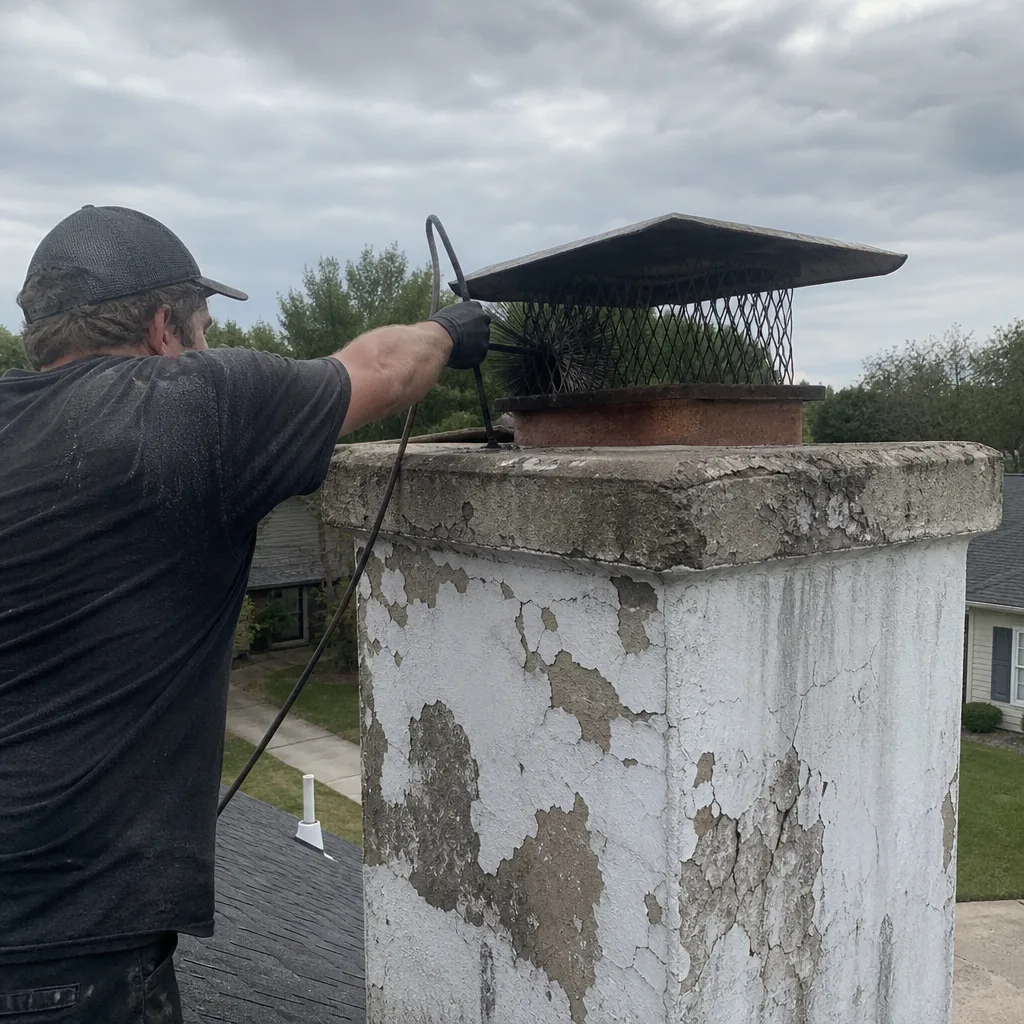 Before
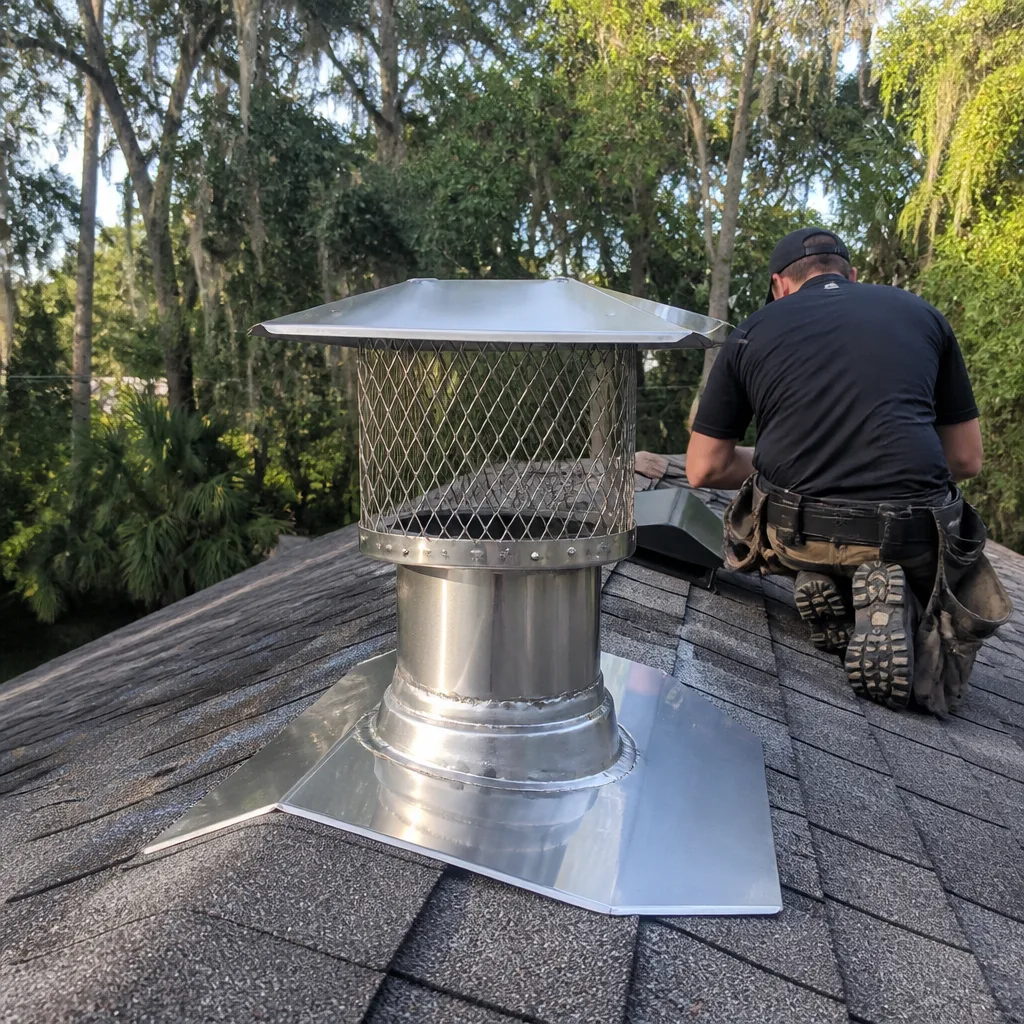 After
After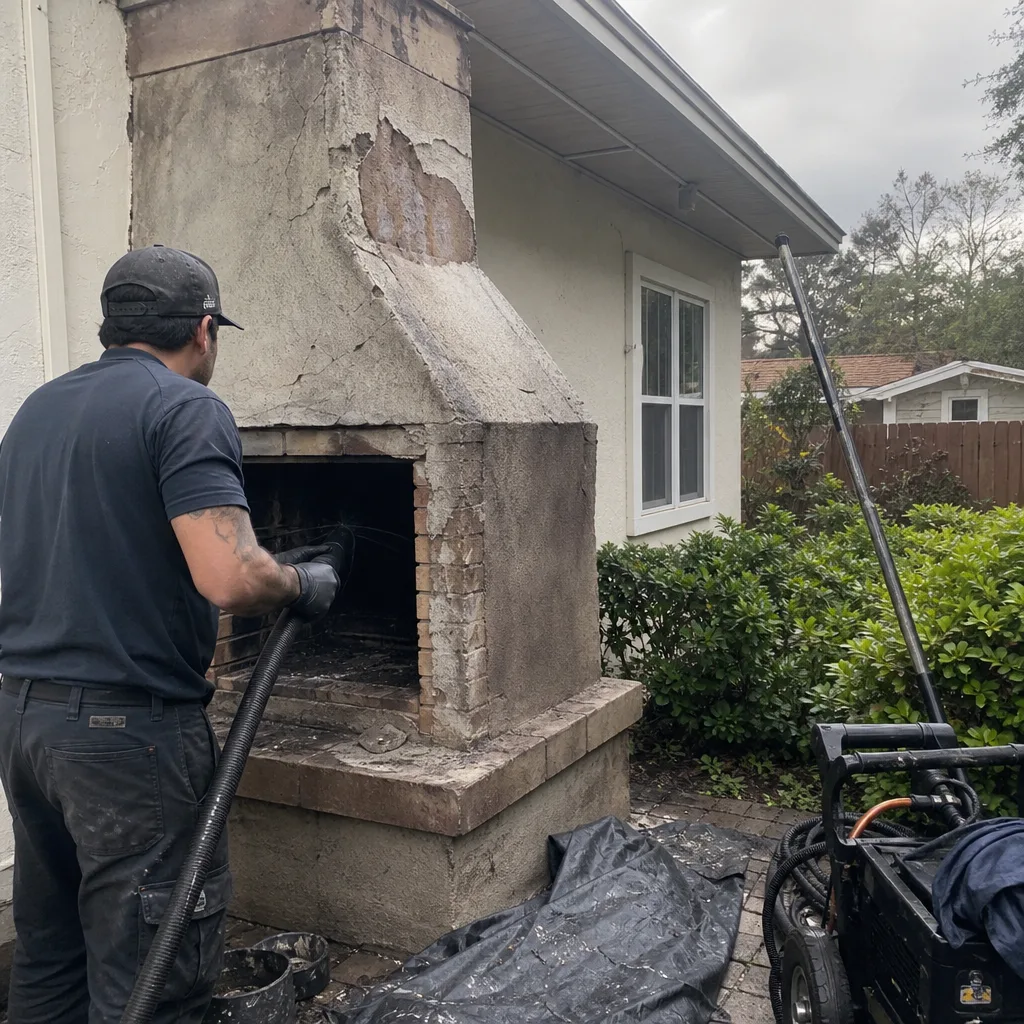 Before
 After
After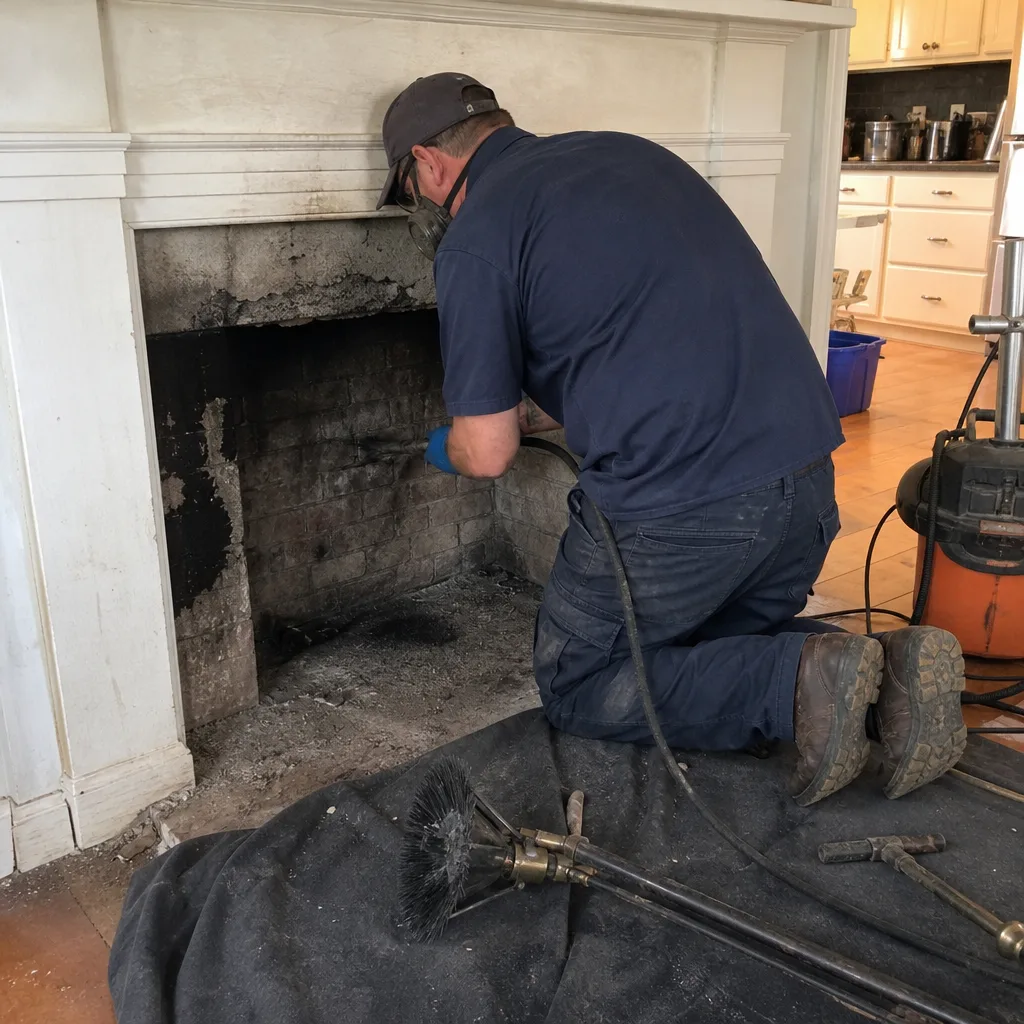 Before
 After
After